Wednesday, September 24, 2008

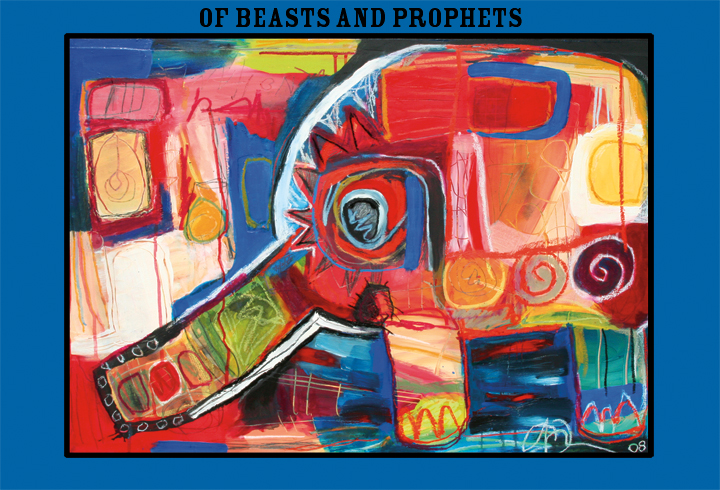
"Of Beasts and Prophets" Art Show Opening

Many thanks to all of you who turned out for my first solo art show, "Of Beasts and Prophets."

Amy, Ahna and Chris, the proud set-up team for the show.

I was moved by the outpouring of enthusiasm and energy at the event, by the community of people who came together around the art, engaging with it, and with each other, through the experience.

Good people, good music and bounteous art...What more could a girl ask for?

My greatest reward as an artist is in the act of creating itself, but it feels like a double bonus when the art is seen and strikes a chord within other people, perhaps providing inspiration or catalyzing some new energy in their own lives.

An art-appreciator takes in "Portals V" (a.k.a. "The Door").

Art is so mysterious in this way. When we make it, we never know how it will affect others. We can only strive to be true to ourselves and to the process, and then let go and allow our creations to do their work in the world…

Above: "The Spinx Speaks in Moon Language," acrylic and pastel on canvas.

For those of you who couldn't be present at the opening, I hope you'll enjoy some of the photos from the evening. I'll also be posting a bit of video footage up here in the near future. To see the pieces that were included in the show, please visit my online gallery. To view all of the photos from the evening, please visit my flickr page.

Thanks again to everyone present (in person and in spirit!) for lending support and good energy during this "opening." Viva el arte!

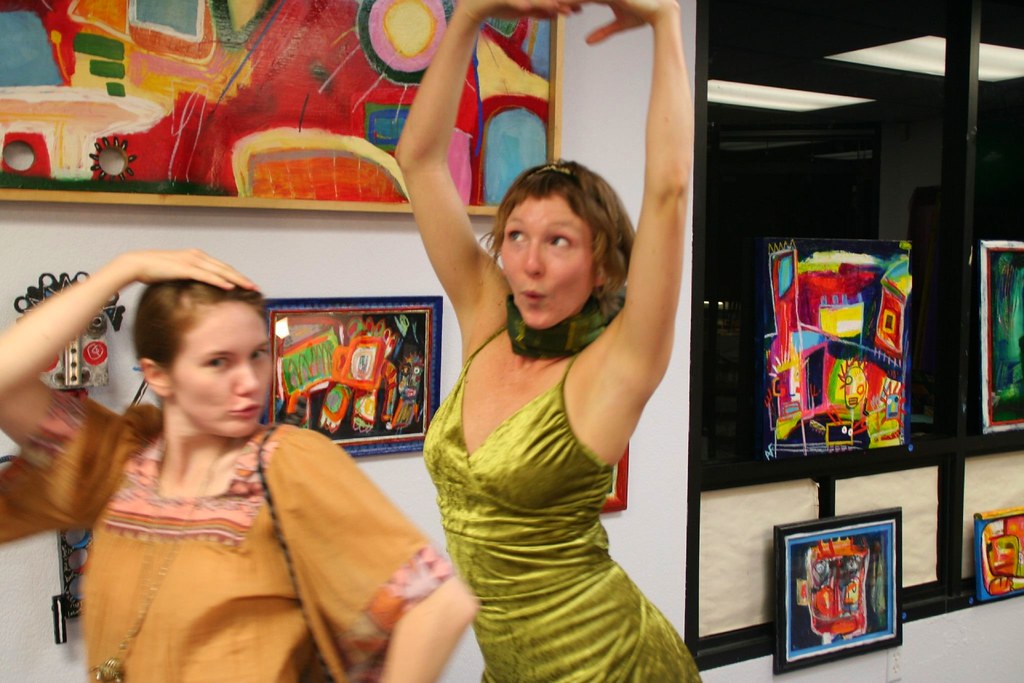
Below: After the crowds depart, Ahna and Amy bust out some interpretive dance moves.


Wednesday, August 27, 2008

'Of Beasts and Prophets' Art Show: Save the Date!


Dear Friends,

This summer I've been visited by a host of strange characters... Sphinxes, unicorns, circus elephants, mangy dogs and prophets, to name a few.

With such company, there's rarely a dull moment in the studio!

Please join us (yes, all of us) for an evening of art, wine and live middle eastern/flamenco music by guitarist Douglas McCarron. Here are the details:

'Of Beasts and Prophets' Art Show
Sunday, September 21, 4-7 pm
at the Art of You Studio
3060 Adams Ave., Suite B, San Diego, CA 92116

Below is a sneak preview of some of the characters that you may get to visit with at the show.

Thank you so much for your continued support, and I look forward to seeing you there!

Ahna


Above: Pariah Dog, mixed media on paper. 9 X 12.


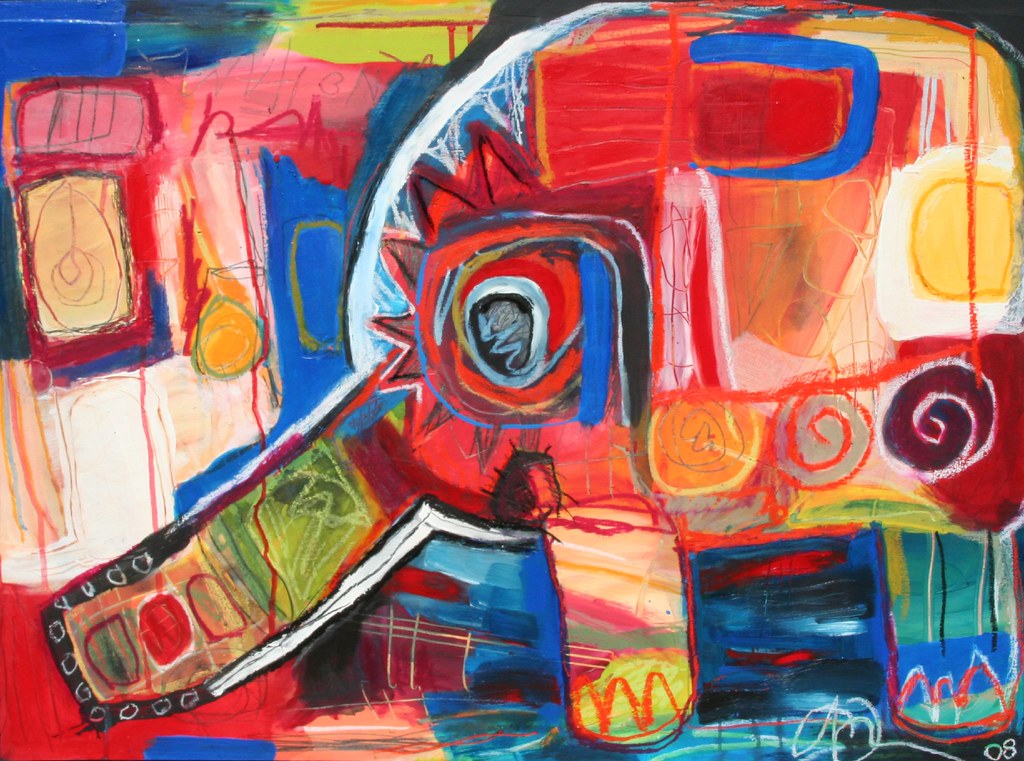
Above: 'The Circus Elephant,' mixed media on paper. 11 X 14.


Above: 'Prophet', plaster and acrylic on an old cutting board. 21 X 24.


Wednesday, August 13, 2008

Weekend Workshop with Jesse Reno

I came across mixed media artist Jesse Reno's work as I have so many other good things in life: by fool's luck and a few too many hours on the Internet.

Following a chain of random links, I stumbled upon Jesse's website and was immediately drawn in by the depth and dimensionality of his work, along with its profusion of curious creatures, (which I have a penchant for, as many of you surely know by now).

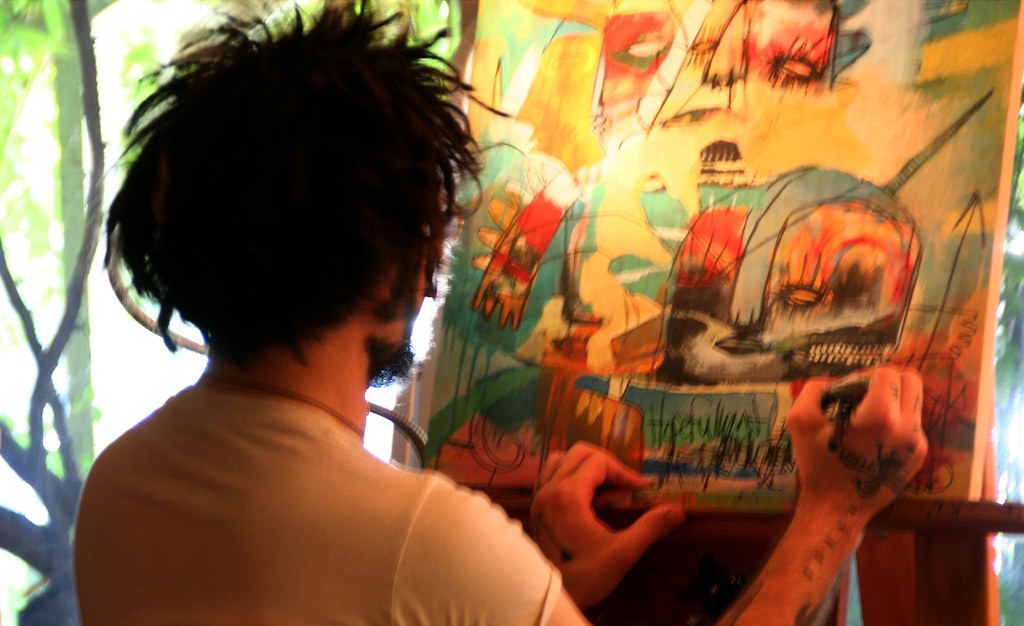
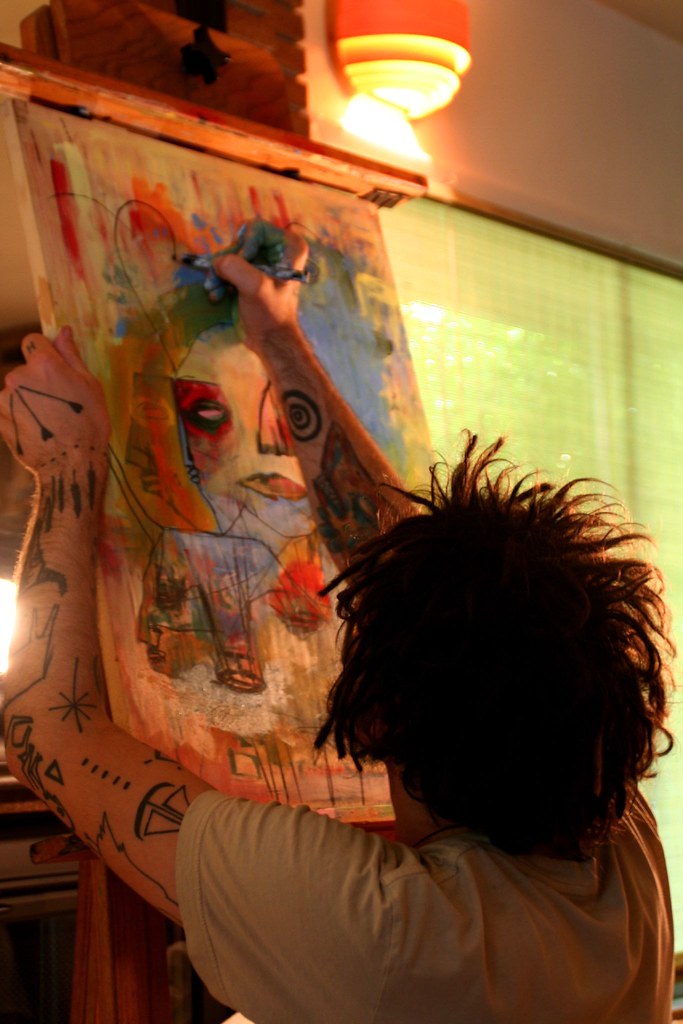
Above: Jesse at work on a painting

Despite my historical misfortunes when it comes to finding art classes (that don't make me fume or fall asleep), I followed a good hunch I had about this Reno fellow and signed up that very night for his three-day workshop at Carol Parks' studio in North Hollywood.

I've just returned from the workshop and am happy to report that the trusty gut didn't lead me astray—I got all the weird creatures I could want, and so much more…

Above: "Baby Mastodon's Last Sunset," one of the paintings I worked on during the weekend.

Finger-painting, Overpopulation and Other Tricks of the Trade
In the interest of sharing with you a bit of what I learned this weekend, I've compiled a list of some of my favorite art process tips from Jesse (paraphrased in Fenderly parlance) that may also be of use to you. Keep in mind that this list includes only a hastily grabbed handful from Jesse's bag of art tricks, but nonetheless, I hope that you'll find something here that furthers your own creative process:

1) Get back to basics. Try starting your piece by painting with your hands. Let yourself revel in the sensual feel of the paint as you smooth it across the wood or canvas. Later on, if you get stuck with the brush, move back to working with your hands as a way to loosen yourself up.

2) If you build it, they will come. Add layer upon layer of paint, pencil, or other media to your surface and watch as surprising forms and patterns evolve. Trust the layering process to lead you organically to an image; pay attention and see who (or what!) wants to take shape.

Above: The first layer of work.

3) Overpopulate, rather than under-populate a piece in the beginning. That way you'll have more directions to go in. Filling your painting with crazy shapes and lines creates fertile material for something rich and mulit-dimensional to take shape.

4) Block it out. When something catches your eye or stands out to you from the rest of the colors and forms in your painting, use a single color to "block out" the space around it and make it pop forward. See what it looks like to isolate the form and bring it to the foreground in this way. You can always paint over it if you don't like it!

Above: This is the same piece, with a few more layers added. The swatch of blue paint in the right hand corner is an example of the "blocking out" technique.

5) If a painting is fighting you, strike back! Slop on an ugly color. Graffiti over it. If necessary, break things! Don't be afraid to make bold moves…You may be surprised at what happens, and following the energy can often mobilize you out of a rut.

6) Create your own pictorial language. Notice the themes, symbols and characters that reappear in your work. What is the story that's trying to tell itself through you? By observing your work from a place of curiosity, you'll stay open to new developments and can learn from what the art has to tell you rather than just repeating what you already know.

Above: At this point, Jesse is nearing the end of his demo (after a few hours of painting, split up over the days). The painting is not yet complete, but already has so many layers and dimensions. Can't wait to see it in its finished state!

7) Work on multiple paintings at once so you don't become too attached to the outcome or get myopic while focusing in on a single piece. Moving between several paintings will help to keep your work fresh and loose and may also make it easier to walk back into the studio, pick something up and go to town, rather than procrastinate about tackling a single, formidable piece.

Above: I worked on three pieces over the course of the weekend. This is the biggest, an old door that Carol gave me to paint on.

The Gift of a True Teacher

Part of the joy for me in working with Jesse was about coming into contact with a fellow artist whose approach to art process mirrors my own in many ways, but is different enough to inspire newness in my work and invite different ways of seeing.

Above: close-up of the door painting in process.

Jesse did not try to impose his views or techniques upon the artists at his workshop. Instead, he offered his experience and personal work style as a single possibility, while inviting others to experiment in order to find the ways that worked best for them.

To me, this is the true role of a teacher, in art, or any subject matter: to inspire you to explore new ways of seeing, to encourage you to work outside self-created limitations, and to develop and strengthen your own voice.

Above: "Blind Martyr Marathon," the final painting I worked on during the weekend.

To see more artwork and photos from the workshop, please visit my flickr page.

Sunday, July 27, 2008

Art Ruckus Shop Now Open!

Greetings, friends,

I'm pleased to announce that the Art Ruckus gallery and shop is now open and ready for your perusal: http://www.artruckus.com/shop/

Above: New work now up in the shop. "The Transmutation." 24 X 24.

As you'll see, the shop link on my website leads you directly to my page on Artbreak, which is an online community for artists to show and sell their work.

I've chosen to set up my shop through Artbreak because I like the community feel of the site, and the sense of being linked to other artists all around the world who are sharing and selling their artwork.

Through this site I've had the pleasure of connecting with artists from Argentina, Poland, Spain, the U.K., Malaysia and many other places around the globe. What a modern privilege and delight!

Above: More recent work. "Dancing Man at Cantina." 32 X 18.

I hope that you will also enjoy visiting this site, browsing my shop, and seeing the work of other international artists. You can view all of the artwork without establishing an account, but if you'd like to purchase or comment upon my or another artist's work, you'll need to set up an account, which is free and only takes a moment.

I'll now be uploading all of my most recent work directly to the gallery/shop, so please check back in periodically to see what's new.

Happy browsing and thank you for your continued support!

Ahna

Monday, July 14, 2008

Recycled Frames 101: Trashy Tips for Artists on a Budget

Along with the paint-flinging frolics and fantastical play of creating come a handful of rather unglamorous tasks that are often a necessary part of bringing art into the world.

Things like organizing, documenting and framing work may be far less fun than the creating of it, but there's a certain satisfaction in bringing the process full circle and finding ways to add interest and inventiveness to even these more practical aspects of artistry.

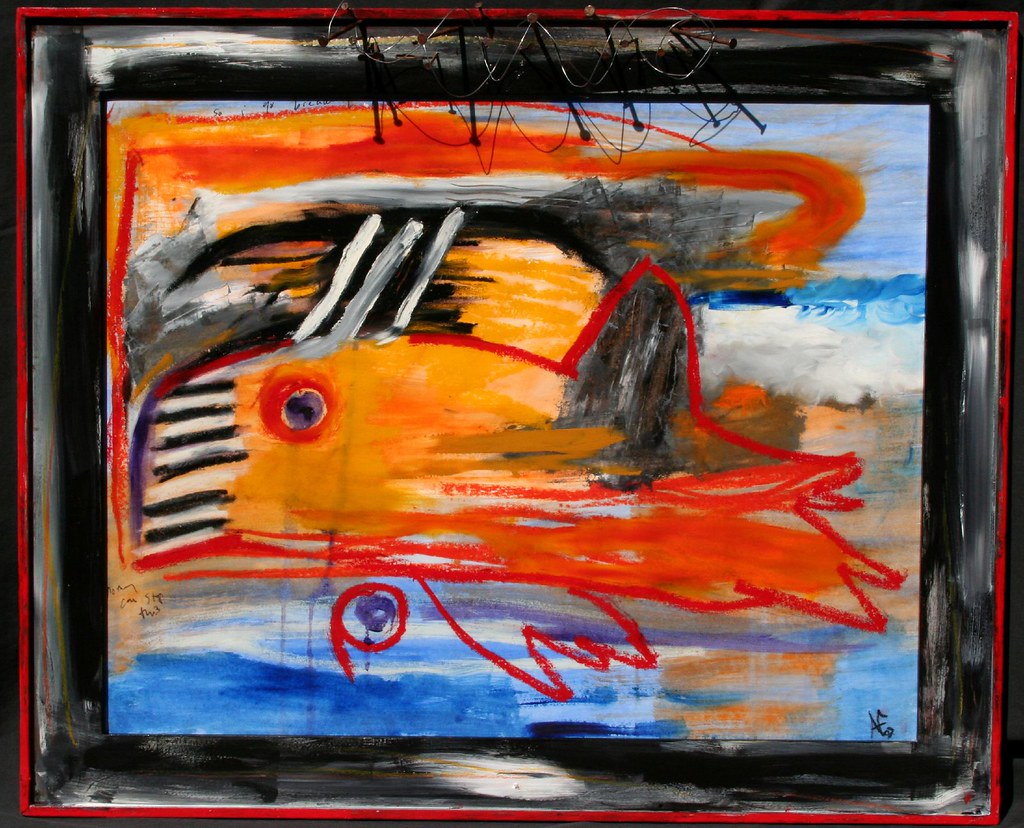
Above: "Piranha." Rusty nails wrapped in wire add prickly appeal to this piece.

The Fundamental Pain of Framing
Framing work used to be number one on my blacklist of odious tasks in the art-making process. Part of what I didn't like about it was that it felt so remote from the spontaneity of my creative process. Framing seemed like it was all about making a polished product, with clean glass gleaming for gallery-goers, something expensive-looking and weighty to "contain" a piece and somehow make it more worthy of sale, or fit for display. Blehck! These connotations were enough to make my innards revolt, and I'd often just stash a canvas away in my studio rather than have to deal with this perceived unpleasantness.

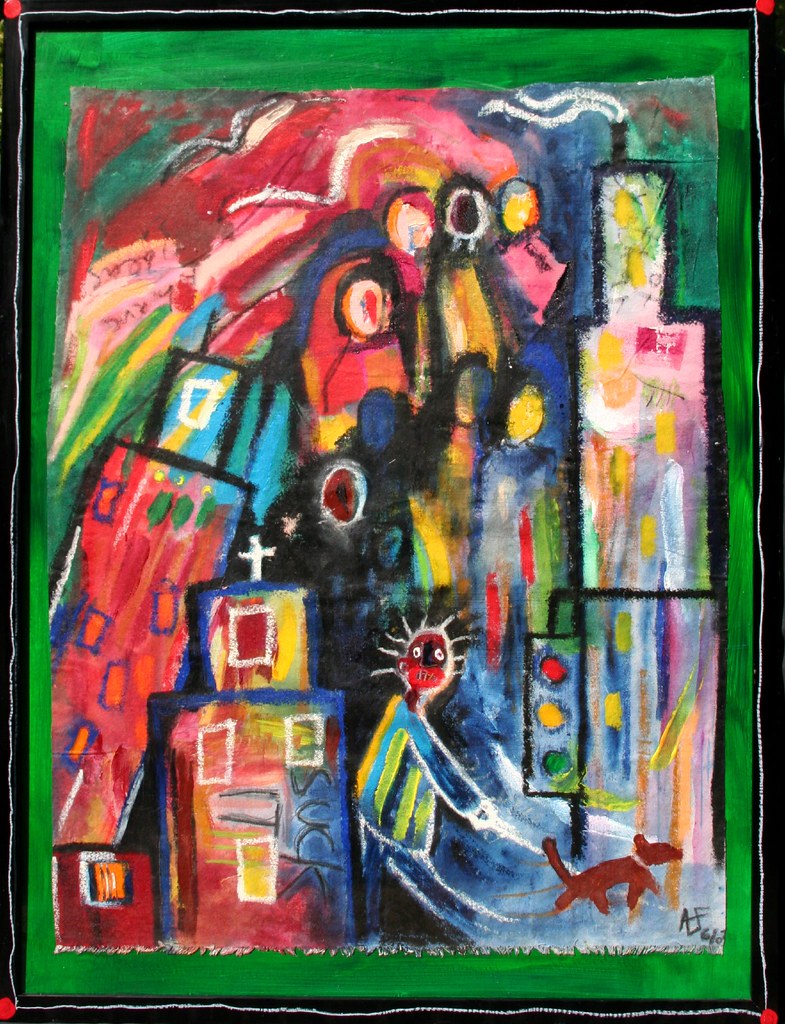
Above: "The Displaced." I claimed this frame from a woman cleaning out her storage space. Score!

A Helping of Junk Art Jubilee
Enter Rodney McCoubrey, my kooky collaboration buddy, whose wizardry with recycled junk totally transformed my outlook on framing. I remember the first time I came to Rodney with one of my paintings, and a drab frame I'd salvaged from an Aaron Brother's dumpster. With a screw gun, some paint, yellow electrical wire and some odd bits of rusty junk, suddenly the frame came alive, sang with the piece, harmonizing with it like a back-up singer supports a lead vocalist.


Above: "Shaman." Rodney's and my first junk art frame co-creation.

Although the framing techniques I use now vary from piece to piece, that first junk-bejewelled frame made with Rodney changed my way of holding this formerly loathsome task, making it into an extension of the creative act. Sure, I still have to deal with mundane minutia like threading screw eyes and cutting glass now and then, but at least I no longer dread the framing process.

If you also find framing to be a pain, here are a few ways I've learned to make the process less precise and pricey, and more creative and spicy!

How to Make Your Own Recycled Frames:

  1. Why pay when you can dumpster dive? (I'm only partly kidding). Frames in art stores or frame shops are ludicrously overpriced. Why break the bank when you can go to a garage sale or thrift shop, or, better yet, get it for free? I make a habit of frequenting my local art stores to see if they have any frames that have been chipped, broken or damaged and are headed for the dumpster. You'd be surprised at the handsome finds that get tossed away each day for their presumed imperfection!
  2. Paint, scratch, scar, layer and prepare your own one-of-a-kind surface. Paint multiple layers of color and then sand through to reveal the shades beneath. Use a knife or other sharp object to create texture in the wet paint.
  3. Garnish lovingly with rubbish. Sometimes, after the second step, a frame will feel complete. Other times, you may want to get out some old metal scraps, rusty nails, wire or other miscellaneous junk to bump your frame up to the next level.
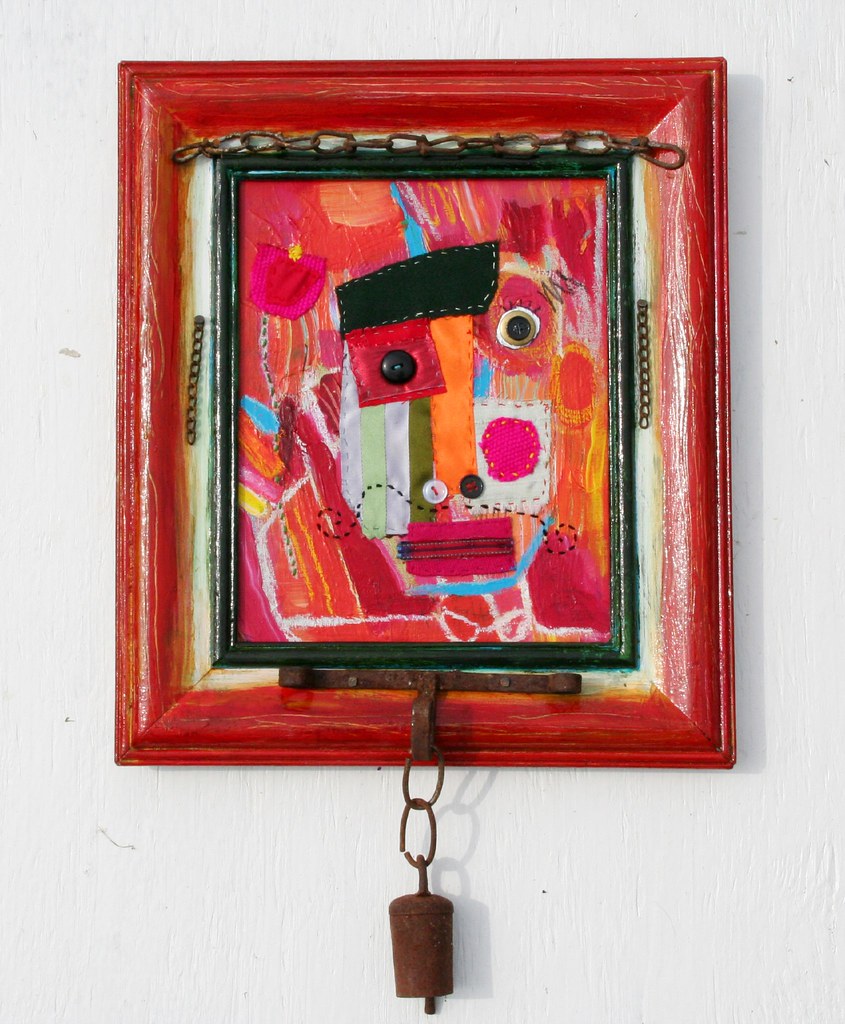
Above: "Torero con Flor." The cowbell was the coup d'etat on this baby... A finishing touch by Rodney.

Most importantly, listen to your art. Ask it what colors it wants to be surrounded with, or what found objects would play on the themes or textures already present? What would further its aliveness?

Framing art yourself may take more time and effort than going to the pros, or buying a readymade frame, but I find that it's kind of like conferring a final blessing on a work before it goes out into the world, or onto the wall. Surrounded with a bit of love, and some creative ingenuity, it can sally forth from the studio, into a life of its own.

Above: "Death of a Unicorn." A discarded frame and a dash of electric blue paint are enough to make even a dead unicorn look lively!


Sunday, June 29, 2008

Trusting the Wisdom of Instinct

Quiet. Color to color. Stroke to stroke. The hands conduct a fluid symphony of movement, fingers sliding down the wet canvas, fists flinging jets of orange paint direct from the tube. Thoughts fall away; one thing leads to the next; every act feels joyously unexpected…


Above: Detail of "Portals I," acrylic, oilstick and house paint on wood. 56 X 14". See full painting.

In painting, we can enter the flow of moment-to-moment living, coming into contact with the part of ourselves that knows just what to do, on an instinctual level. By practicing listening to this inner wisdom, again and again, we learn to trust how the hand gravitates toward a certain color, or how a spill or accident can open the way to a deeper creative experience.

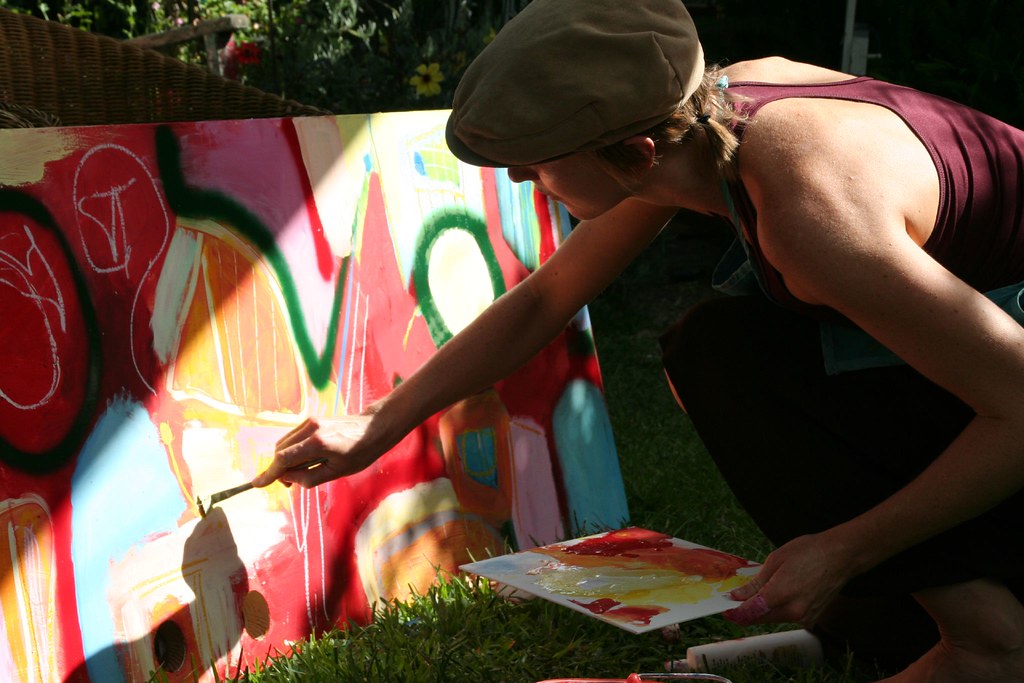
Above: Me painting in my friend Chris's studio. Working on multiple surfaces at once helps me stay loose.

I'm beginning to understand that it's this same intuitive pull we follow in painting and other art forms that guides us through the rest of our lives, attracting us to certain places or people, aligning us with what feels right at the deepest level.

In this sense, art can be like a training ground. It teaches us to move from this place of inner knowing, to learn what it feels like in the body, to look for it, to trust its inherent wisdom.

Above: "Impenitent Eve." Acrylic and oilstick on paper. 18 X 24".

Sometimes our instinct speaks to us in a frisson of feeling, a tingle up the spine, a heat, a flutter in the chest. I'm learning to trust these subtle signals as my guides, emissaries of some deeper knowing inside me.

The moments of doubt, of feeling stuck, are just as important as those spent in the flow (though they're usually not quite as pleasant). The doubting mind strengthens our resolve, humbles us and brings greater depth and balance to our work. You're probably familiar with doubt's refrain,

an insistent little ditty that goes something like this: What should I do? Where is this going? What on earth am I doing? Etc., etc.

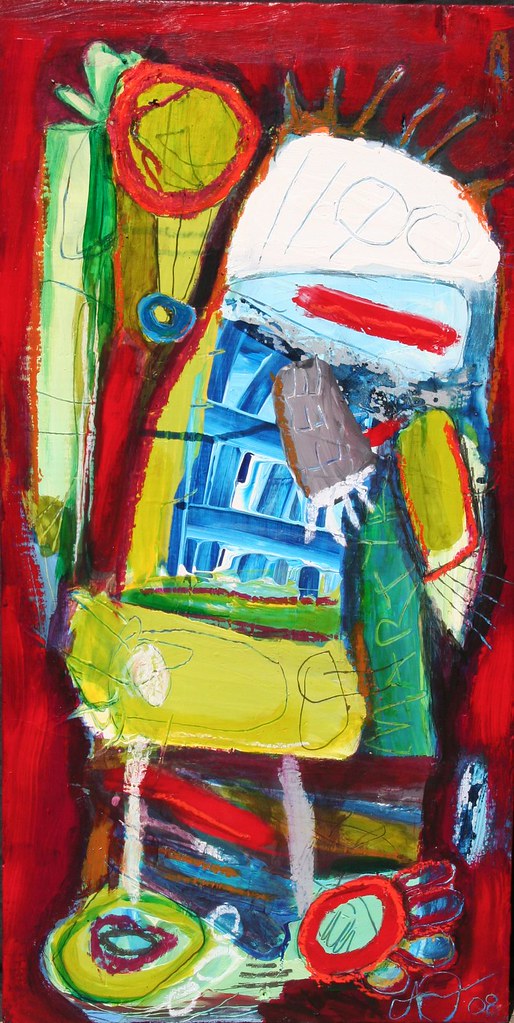
Above: "Unicorn on the Run," acrylic on canvas. See it at Art 'N' Soul Gallery.

I certainly spend my fair share of time stymied in these spaces, like a chess player lost in the mental fanfare of mapping out his next move. The chest feels blocked, I forget to breathe, reeled into the illusion that if I just think hard enough, I'll figure it out!

Above: "The Displaced, II." Acrylic and oil pastel on canvas. Also on display at Art 'N' Soul.

But in my experience, no satisfying creative act ever really comes about like that. When I look back over my art life, and recognize the soaring moments, the times when a painting seemed to crescendo with a final stroke of grace, not one of those times has ever directly arisen from a place of perseverating, or from second-guessing what my gut already knows.

This rule goes for big life decisions, as well. I find that most often they're made from a place of quiet knowing, rather than from that chattery, cerebral realm where doubt and fear are at the helm.

One reason I return to painting, to art, is as a way of strengthening this muscle, of letting this quiet knowing have free rein in the sanctuary of my studio, to see where it leads me and to realize, most importantly, that I don't have to know.

Above: "Portals III," Acrylic, oil pastel and ballpoint pen on cardboard. 18 X 19".

Nope. Knowing where you're going definitely doesn't seem to be a salient trait of this artist's path. But trusting the not-knowing, letting yourself plunge blindly into the experience of creating, or living, is no easy feat.

In a society consumed with plotting out every last detail of our lives, where value is placed on coming up with some convenient, single-shot punch-line to confidently assert who we are and what we do, not knowing, not having a plan or agenda (or clue!), seems downright scary (not to mention countercultural).

But if we're honest with ourselves, if we're moving from a place of what's real in the moment instead of what we planned or hoped or imagined would happen, we may find that we know less and less in the traditional sense (read: bye-bye, best-laid plans!) but are blessed with another kind of knowing, which supplants this old way, and flows and changes and leads us on its mysterious course, ready or not.

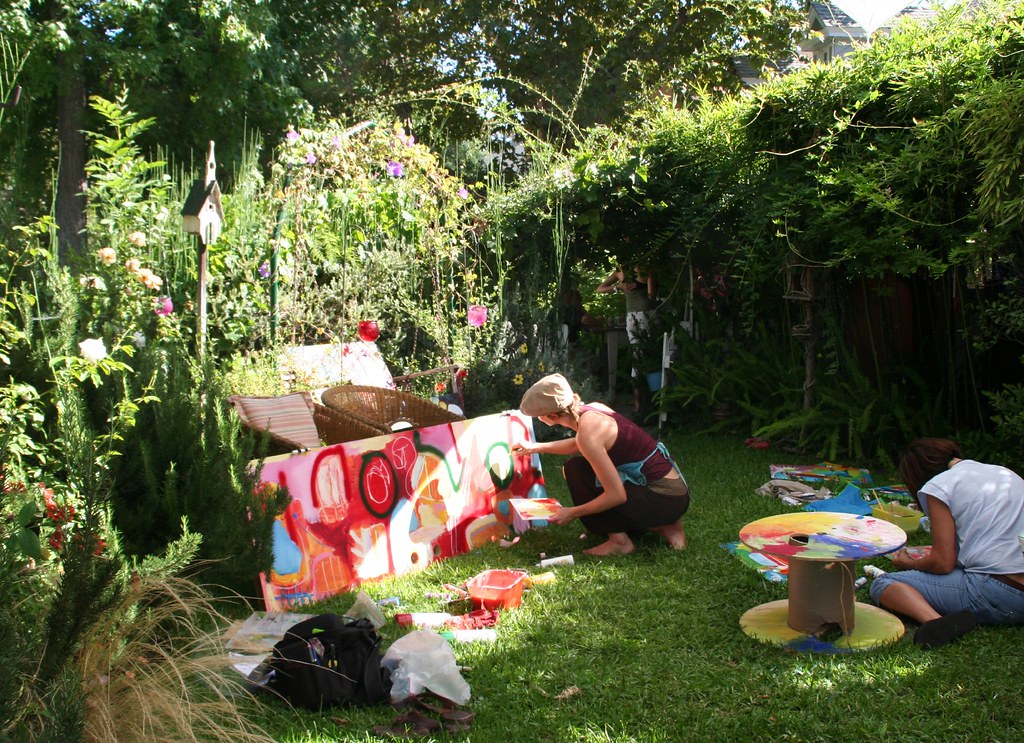
Above: Me and my mom painting during a day-long retreat at The Art of You.

Working this way in painting, to me, is not about meticulously rendering a subject or wrestling with the paint until it submits to our will. It's more about plunging in, with our clothes on, and seeing where the flow takes us. Which is not to say we'll always like it. (Oh-ho-no!) But it seems to me that in giving up knowing exactly what we're doing, in relinquishing that tight grip of control and opening up to whatever wishes to surface, life and art become ceaselessly rich.

In fact, in surrendering our ideas of how things should look or be, we are often rewarded with something far more juicy or breath-taking than our limited intellects could have possibly dreamed up.

Above: Detail of "Portals II," acrylic and oilstick on canvas, 60 X 24". See full painting.

Following the wisdom of our instinct means tapping into a wellspring of some mysterious, free-flowing creativity. Those nay-saying voices of doubt or fear may protest this on all fronts, shouting: Stop! You don't know what you're doing! Anything could happen! To which you may reply:

Exactly.
Tuesday, June 10, 2008

Comfort vs. Aliveness

One of the themes that seems to turn up again and again in my life and art is the choice between comfort and aliveness.

I think an artist's work is always partly like walking in the dark, moving forward without knowing exactly where we are going, but moving forward nonetheless, because that's how we say yes to life.

Above: "Untitled," mixed media on canvas

When we find something comfortable, perhaps something we do well, and we stay there, saying no to growth because it means beginning over, and not knowing again, part of us goes to sleep.

A wise teacher recently told me: "A yes to aliveness is also a yes to insecurity, fear and anxiety." I found it revelatory to remember that you simply can't have the one without the others. Insecurity, fear and anxiety are the bedfellows of any artist, any seeker, anyone, really, who is willing to leave behind familiar realms in favor of growth.

Above: "Dreamflight," fabric collage

We never know, when we step boldly out into life, what awaits; we have to be willing to make a thousand mistakes, or we might as well stay at home on the sofa and watch reruns.

In art it's often a matter of experimenting with a new material or form, working outside our comfort zone, or inviting an unknown element into our process, like a wild collaborator or a tool we know nothing about.

Above: Working on a new junk sculpture

It seems to me that the same principles apply to life at large. We have to throw ourselves into life wholeheartedly (even cluelessly, I might add) willing to hate something, to say "this isn't for me," to buy the one-way ticket only to change our minds and come right back, with new eyes ready to see something that we were previously blind to.

Above: "The Patriarch," junk assemblage

Sometimes we have to spend time somewhere unfamiliar to us, somewhere that wakes up our senses and jostles our brains into new ways of thinking. Or we have to invite something into our lives that perhaps scares us a little bit (or a lot), something that is not cushioned in sureness, something that brings us right to our edge.

I try to remember this choice between comfort and
aliveness whenever I'm faced with big decisions in my life, especially when I'm afraid of making mistakes. As that same wise teacher so rightly reminded me: "If there isn't a spirit of adventure, what's the point?"

Perhaps this is part of the reason I feel drawn to art, again and again in my life. Because at its root, it's about adventure, about following our instincts and learning the way as we go. There's no real formula in art, despite what some teachers or textbooks may advise. Every artist, every creator, has to start from scratch, and chart his or her own course, knowing it will be different from the rest.

Above: "Corazoncito Cocodrilo," collage

And taking risks is part of that. For me, wielding a screw gun or a welder is a lot less comfortable than moving paint around on a canvas. That doesn't mean that I should do one over the other, but it does mean that I can venture into new ground, and find my edge by trying something that feels foreign to me. I may get stuck, I may occasionally fling things across a room or feel about as safe as a toddler with a table saw, but even so, I can feel a surge of aliveness in me as I struggle.

Above: Me playing with junk in my backyard

Through risk-taking in art we get to practice choosing aliveness over comfort, again and again. And each time we do, the part of us that wants to grow, that wants, like a flower, to turn its face up to the sun, is letting a new petal pull back, is letting more of us be exposed, is choosing to open.